(May 2026) Our Village School – Part 3, 1900 to 1935
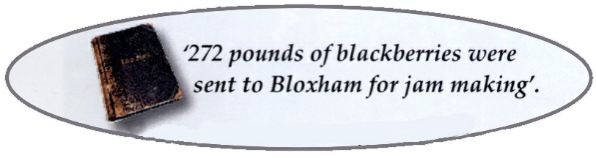
In 1900 the total population of Sibford Gower and Burdrop was 394, and the Ferris was 255 and the two parishes provided all the 100 children at this time. The majority of children walked to the village school but 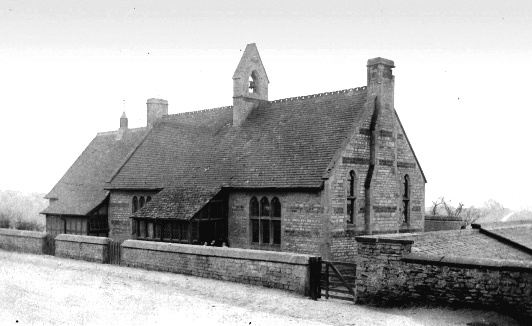 there were rarely more than 75% in school at any given time. Attendance was greatly affected by a number of factors. Ill health resulted in a lot of absence with whooping cough being the most frequently noted infectious disease. Poor clothing and inadequate footwear often meant that children could not attend in bad weather. In a predominantly agricultural community, school was of secondary importance to the planting and harvesting of crops. There are many mentions, in the Log Books, of children being absent for blackberrying, potato picking, allotment work, haymaking, reaping and even dandelion picking.
 The children were divided into three classes: the Infants, the Lower Division which consisted of standards 1, 2, and 3 and the Upper Division which comprised Standards 4, 5, and 6. The syllabus for the infants in 1900, in addition to reading, writing and arithmetic included recitation, singing, physical exercise, needlework, knitting and handwork while the older children added to these, drawing, musical drill, geography, history and object lessons on scientific subject. All in all, a pretty comprehensive curriculum which gave the rural village children a good educational grounding.
The age of the child did not affect which class they were in. This depended on the examinations of the various Standards. The more able children, once they reached the level required in Standard 6, could remain in the same class until the end of their time in school. The older children were sometimes called upon to help with the younger ones alleviating the pressure on the teaching staff. There was little or no communication between the home and the school and the schoolmaster enjoyed a considerably higher status in the community.
The Hadow report in 1926 recommended the separation of primary and secondary schooling with the change at 11 years of age up until the leaving age of 14. This was not fully implemented until the Education Act of 1944. The first Scholarship Intelligence Test was introduced in 1928. Sibford’s first success was in 1931. If you were successful at the age of eleven and won a Scholarship to go to Banbury Grammar School you would have had a long and difficult journey. You would walk or cycle the three and a half miles to Hook Norton railway station, catch a train via Bloxham, Adderbury and Kings Sutton, finally arriving at Banbury station. You then had a mile and a half walk from the station to the school. And then you did the same in reverse to get home. How many eleven-year-olds would be allowed to do that today!
Maureen Hicks